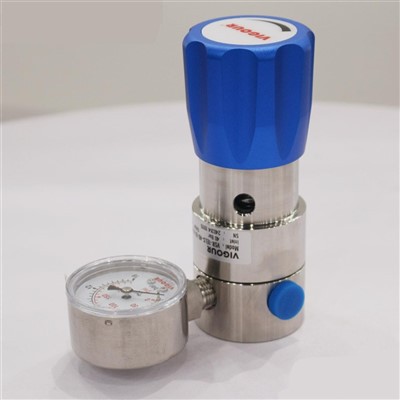
Calibrating a high purity gas regulator is a topic that often arises among users of these essential devices. As a supplier of High Purity Gas Regulator, I am frequently asked whether it is possible for an individual to calibrate a high purity gas regulator by themselves. In this blog post, I will delve into this question, exploring the intricacies of calibration, the potential risks involved, and the circumstances under which self - calibration might be feasible.
Understanding High Purity Gas Regulators
Before discussing calibration, it's crucial to understand what high purity gas regulators are and why they are so important. High purity gas regulators are designed to control the pressure and flow of high - purity gases, such as nitrogen, oxygen, and hydrogen, in various applications, including laboratories, semiconductor manufacturing, and medical facilities. These regulators ensure that the gas is delivered at a consistent and accurate pressure, which is vital for the safety and efficiency of the processes they support.
There are different types of high purity gas regulators available in the market, such as Pressure Regulator Gas Stick and High Pressure High Flow Regulator. Each type is tailored to specific requirements, and their calibration needs may vary accordingly.
The Importance of Calibration
Calibration is the process of comparing the output of a measuring device (in this case, the gas regulator) to a known standard to ensure its accuracy. For high purity gas regulators, accurate calibration is of utmost importance. Incorrectly calibrated regulators can lead to inconsistent gas flow and pressure, which can have serious consequences.
In a laboratory setting, inaccurate gas pressure can affect the results of experiments, leading to unreliable data. In semiconductor manufacturing, even a slight deviation in gas pressure can cause defects in the production process, resulting in costly losses. In medical applications, improper gas pressure can compromise patient safety. Therefore, maintaining the accuracy of high purity gas regulators through regular calibration is non - negotiable.


Can You Calibrate a High Purity Gas Regulator by Yourself?
The short answer is: it depends. There are several factors to consider when determining whether self - calibration is a viable option.
Technical Expertise
Calibrating a high purity gas regulator requires a certain level of technical knowledge. You need to understand the working principles of the regulator, how to use calibration equipment, and how to interpret the calibration results. High purity gas regulators are complex devices, and improper calibration can not only render the regulator inaccurate but also damage it.
For example, if you do not understand how to adjust the internal components of the regulator correctly, you may cause leaks or other malfunctions. If you lack the necessary technical expertise, attempting self - calibration can be a risky endeavor.
Availability of Calibration Equipment
To calibrate a high purity gas regulator accurately, you need access to proper calibration equipment. This includes precision pressure gauges and other measuring tools that are traceable to national or international standards. High - quality calibration equipment can be expensive, and not everyone has the means to invest in it.
Moreover, calibration equipment also needs to be regularly calibrated itself to ensure its accuracy. If you do not have the resources to maintain the calibration of your calibration equipment, the results of your self - calibration may be unreliable.
Regulatory Requirements
In many industries, there are strict regulatory requirements regarding the calibration of measuring devices, including high purity gas regulators. These regulations often mandate that calibration be performed by qualified personnel using approved methods and equipment.
For instance, in the medical industry, calibration records need to be maintained for a certain period, and the calibration process must comply with specific standards. If you attempt self - calibration and do not meet these regulatory requirements, you may face legal consequences.
Risk Tolerance
You also need to consider your risk tolerance. If the consequences of an inaccurate regulator are severe, such as in a critical medical or industrial process, it may be safer to have the calibration performed by a professional calibration service.
On the other hand, if the application is less critical and you have the necessary skills and resources, self - calibration may be a more acceptable option.
When Self - Calibration Might Be Appropriate
There are some situations where self - calibration of a high purity gas regulator could be considered.
Simple Regulators in Non - Critical Applications
If you are using a relatively simple high purity gas regulator in a non - critical application, such as a small - scale laboratory experiment where the consequences of a slight inaccuracy are minimal, and you have the technical expertise and basic calibration equipment, self - calibration might be an option.
For example, if you are using a gas regulator for a hobbyist chemistry project and you have a basic understanding of how to adjust the regulator and access to a simple pressure gauge, you may be able to perform self - calibration.
Initial Checks and Monitoring
Even if you do not have the resources to perform a full - scale calibration, you can conduct some initial checks and monitoring of your high purity gas regulator. You can visually inspect the regulator for any signs of damage or leaks, and you can monitor the pressure readings over time to detect any significant changes.
These checks can help you identify potential problems early and determine whether professional calibration is necessary.
Professional Calibration Services
In most cases, it is advisable to have your high purity gas regulator calibrated by a professional calibration service. Professional calibration services have the following advantages:
Expertise
Professional calibration technicians are trained and experienced in calibrating high purity gas regulators. They have in - depth knowledge of the devices and the calibration procedures, ensuring accurate and reliable results.
State - of - the - Art Equipment
Professional calibration services invest in high - quality calibration equipment that is regularly maintained and calibrated to ensure its accuracy. This guarantees that your regulator will be calibrated to the highest standards.
Compliance
Professional calibration services are familiar with the regulatory requirements in different industries. They can ensure that the calibration process and records meet all the necessary regulatory standards.
Conclusion
In conclusion, while it is technically possible to calibrate a high purity gas regulator by yourself, it is not always the best option. The decision to attempt self - calibration should be based on your technical expertise, the availability of calibration equipment, regulatory requirements, and your risk tolerance.
As a supplier of high purity gas regulators, I recommend that you carefully evaluate these factors before deciding whether to perform self - calibration. In most cases, professional calibration services offer a more reliable and compliant solution.
If you are in the market for high purity gas regulators or need more information about calibration, we are here to help. Our team of experts can provide you with the guidance and support you need to ensure the proper use and calibration of your regulators. Whether you are a small - scale user or a large - scale industrial client, we are committed to providing you with high - quality products and services. Contact us to discuss your specific requirements and explore the best solutions for your gas regulation needs.
References
- ASTM International. Standards related to gas regulator calibration.
- ISO standards for measuring device calibration.
- Industry - specific regulatory documents regarding the calibration of high purity gas regulators.