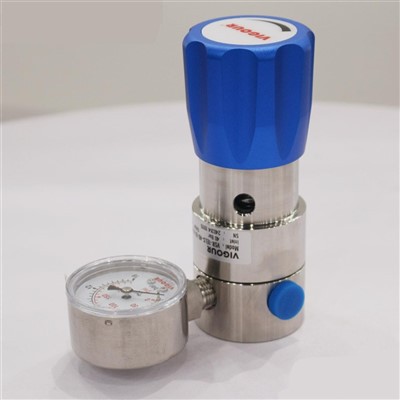
What is the Maximum Flow Rate of HP Gas Regulators?
As a supplier of HP gas regulators, I often receive inquiries from customers about the maximum flow rate of these essential devices. Understanding the maximum flow rate is crucial for ensuring that the gas regulator can meet the specific requirements of various applications. In this blog post, we will delve into the concept of maximum flow rate, factors that influence it, and how it relates to the performance of HP gas regulators.
Understanding Maximum Flow Rate
The maximum flow rate of a gas regulator refers to the highest volume of gas that the regulator can deliver per unit of time under specific conditions. It is typically measured in standard cubic feet per hour (SCFH) or liters per minute (LPM). The maximum flow rate is an important parameter because it determines the regulator's capacity to supply gas to a system or equipment.


For instance, in industrial applications such as welding, metal cutting, or chemical processing, a high flow rate is often required to ensure efficient and continuous operation. On the other hand, in laboratory settings or small-scale applications, a lower flow rate may be sufficient.
Factors Affecting the Maximum Flow Rate
Several factors can influence the maximum flow rate of HP gas regulators. These include:
- Inlet Pressure: The pressure of the gas entering the regulator has a significant impact on the flow rate. Generally, a higher inlet pressure allows for a greater flow rate, as there is more force available to push the gas through the regulator. However, there are limits to this relationship, and the regulator must be designed to handle the specific inlet pressure range.
- Outlet Pressure: The desired outlet pressure also affects the flow rate. If a lower outlet pressure is required, the regulator may be able to achieve a higher flow rate. Conversely, a higher outlet pressure will typically result in a lower flow rate.
- Regulator Size and Design: The physical size and internal design of the regulator play a crucial role in determining its flow capacity. Larger regulators with larger internal passages and valves can generally handle higher flow rates. Additionally, the design of the regulator's diaphragm, valve seat, and other components can affect the efficiency of gas flow.
- Gas Type: Different gases have different physical properties, such as density and viscosity, which can influence the flow rate. For example, lighter gases like hydrogen or helium may flow more easily than heavier gases like carbon dioxide or nitrogen.
- Temperature: Temperature can also affect the flow rate of gas. As the temperature increases, the gas expands, which can lead to an increase in flow rate. However, extreme temperatures can also affect the performance of the regulator's components, so it is important to consider the operating temperature range.
Determining the Maximum Flow Rate
To determine the maximum flow rate of an HP gas regulator, manufacturers typically conduct extensive testing under controlled conditions. These tests involve measuring the flow rate at various inlet and outlet pressures, using different gases, and at different temperatures. The results of these tests are then used to establish the regulator's performance specifications, which are usually provided in the product documentation.
When selecting an HP gas regulator for a specific application, it is important to consider the maximum flow rate requirements. You should also take into account the other factors mentioned above, such as inlet and outlet pressures, gas type, and temperature. By choosing a regulator with the appropriate maximum flow rate, you can ensure that it will operate efficiently and reliably.
Importance of Maximum Flow Rate in Different Applications
The maximum flow rate of HP gas regulators is critical in a wide range of applications. Here are some examples:
- Industrial Applications: In industries such as manufacturing, petrochemicals, and food processing, high flow rates are often required to power equipment such as furnaces, burners, and pneumatic tools. A regulator with a sufficient maximum flow rate ensures that these processes can operate smoothly and continuously.
- Medical Applications: In medical settings, gas regulators are used to control the flow of oxygen, nitrogen, and other gases to patients. The maximum flow rate must be carefully regulated to ensure that patients receive the appropriate amount of gas.
- Laboratory Applications: In laboratories, gas regulators are used for various purposes, such as gas chromatography, chemical synthesis, and calibration. The flow rate must be precise and stable to ensure accurate results.
- Residential Applications: In residential settings, gas regulators are used to control the flow of natural gas or propane to appliances such as stoves, water heaters, and furnaces. A regulator with the right maximum flow rate ensures that these appliances operate safely and efficiently.
Our Range of HP Gas Regulators
As a supplier of HP gas regulators, we offer a wide range of products to meet the diverse needs of our customers. Our regulators are designed and manufactured to the highest standards of quality and performance, ensuring reliable operation and long service life.
- Calibration Gas Regulators: These regulators are specifically designed for calibration applications, where precise control of gas flow is essential. They offer high accuracy and stability, making them ideal for use in laboratories and other precision environments.
- Single Stage Gas Pressure Regulator: Our single stage regulators are suitable for applications where a constant outlet pressure is required. They are simple to install and operate, and offer a wide range of flow rates to meet different needs.
- Back Gas Pressure Regulator: These regulators are used to maintain a constant back pressure in a system. They are commonly used in applications such as gas storage and distribution, where it is important to prevent the backflow of gas.
Contact Us for Your HP Gas Regulator Needs
If you are looking for high-quality HP gas regulators with the appropriate maximum flow rate for your application, we are here to help. Our team of experts can assist you in selecting the right regulator based on your specific requirements. We also offer comprehensive technical support and after-sales service to ensure that you are completely satisfied with your purchase.
Whether you are in the industrial, medical, laboratory, or residential sector, we have the expertise and products to meet your needs. Contact us today to discuss your requirements and let us help you find the perfect HP gas regulator for your application.
References
- Perry, R. H., & Green, D. W. (Eds.). (2008). Perry's Chemical Engineers' Handbook. McGraw-Hill.
- Ludwig, E. E. (1997). Applied Process Design for Chemical and Petrochemical Plants. Gulf Publishing Company.
- McCarthy, G. (2006). Gas Regulators: Design, Selection, and Installation. Elsevier.