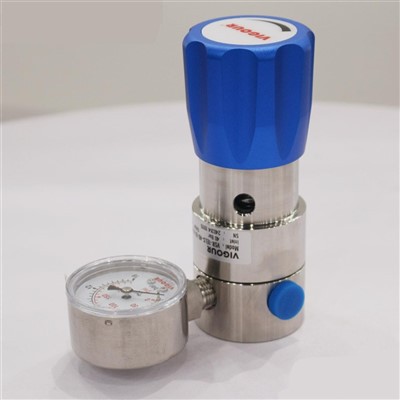
Hey there! As a supplier of Pressure Gas Needle Valves, I've been dealing with these little but super important components for years. Today, I wanna chat about something that might not seem too exciting at first glance but is actually pretty crucial in the world of gas flow control: the impact of the valve needle shape on the flow control of a Pressure Gas Needle Valve.
First off, let's understand what a Pressure Gas Needle Valve is. If you're new to this, a Pressure Gas Needle Valve is a type of valve that's used to precisely control the flow of gases under pressure. It's like the traffic cop of the gas - flow world, deciding how much gas gets to pass through at any given time.
Now, the valve needle is the heart and soul of this valve. It's the part that moves up and down to either open or close the valve opening, thereby controlling the gas flow. And here's the kicker - the shape of this needle can have a huge impact on how well the valve works.
Different Needle Shapes and Their Effects
Conical Needles
One of the most common needle shapes you'll come across is the conical needle. These needles have a tapered shape, kind of like a cone. The beauty of a conical needle is that it provides a smooth and gradual change in the flow rate as the needle is moved. This is because the taper allows for a progressive increase or decrease in the opening between the needle and the valve seat.
For applications where you need to make small, precise adjustments to the gas flow, conical needles are a great choice. Let's say you're working in a laboratory setting where you're conducting experiments that require very accurate control of gas flow. A conical - shaped needle in your Pressure Gas Needle Valve will let you fine - tune the flow with ease. You can slowly turn the valve handle, and the conical needle will gradually open or close the valve, giving you that precise control you need.
Cylindrical Needles
Cylindrical needles, on the other hand, have a straight - sided shape. They're different from conical needles in that they provide a more abrupt change in the flow rate. When you start to open a valve with a cylindrical needle, the flow rate increases more rapidly compared to a conical needle.
This can be an advantage in some situations. For example, if you're in an industrial process where you need to quickly start or stop the gas flow, a cylindrical needle might be the way to go. Think about a manufacturing plant where you're using gases for a specific process. You might need to rapidly introduce a large amount of gas into a chamber, and a cylindrical - shaped needle can help you do that.
Rounded Needles
Rounded needles have a curved tip. This shape is designed to reduce the wear and tear on the valve seat. When the needle makes contact with the seat, the rounded tip distributes the force more evenly, which can extend the lifespan of the valve.
In terms of flow control, rounded needles offer a compromise between the smooth control of conical needles and the rapid response of cylindrical needles. They provide a relatively smooth change in flow rate while still being able to handle higher - flow applications better than conical needles in some cases.
Flow Characteristics and Needle Shape
The shape of the valve needle also affects the flow characteristics of the gas passing through the valve. For instance, the flow coefficient (Cv) of a valve is influenced by the needle shape. The Cv value tells you how much fluid (in this case, gas) can pass through the valve at a given pressure drop.
Conical needles generally have a lower Cv value compared to cylindrical needles. This means that for a given pressure drop, a valve with a conical needle will allow less gas to flow through than a valve with a cylindrical needle. So, if you need a high - flow valve, you might want to consider a cylindrical needle.
Another important flow characteristic is the flow pattern. The shape of the needle can determine whether the gas flows in a laminar or turbulent manner. Laminar flow is smooth and orderly, while turbulent flow is chaotic and can cause more noise and vibration. Conical needles tend to promote laminar flow, which is beneficial in applications where you want a quiet and stable gas flow, like in some medical equipment.
Pressure and Needle Shape
Pressure is another factor that interacts with the needle shape in a Pressure Gas Needle Valve. High - pressure applications require needles that can withstand the force exerted by the gas. Cylindrical needles are often better suited for high - pressure situations because their straight - sided design can handle the pressure more effectively.
On the other hand, conical needles might be more prone to damage under high pressure. The taper of the conical needle can make it more vulnerable to bending or deformation if the pressure is too high. However, in low - pressure applications, conical needles work just fine and offer the precise control that many users need.
Applications and Needle Shape Selection
The choice of needle shape really depends on the specific application. In the medical field, for example, where precise gas flow control is essential, conical needles are commonly used. Devices like anesthesia machines need to accurately deliver a specific amount of gas to the patient, and a conical - shaped needle in the Pressure Gas Needle Valve ensures that this can be done safely and effectively.
In the oil and gas industry, where high - pressure and high - flow applications are the norm, cylindrical needles are often preferred. Pipelines and refineries need valves that can handle large volumes of gas under high pressure, and cylindrical - shaped needles in the valves can meet these requirements.
Our Product Range
As a Pressure Gas Needle Valve supplier, we offer a wide range of valves with different needle shapes to meet the diverse needs of our customers. Whether you need a valve for a laboratory experiment, an industrial process, or a medical device, we've got you covered.
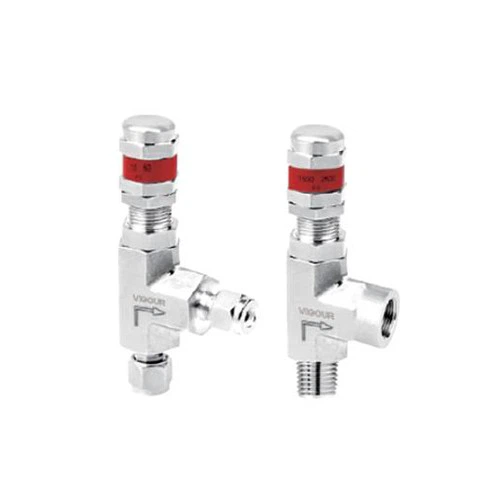
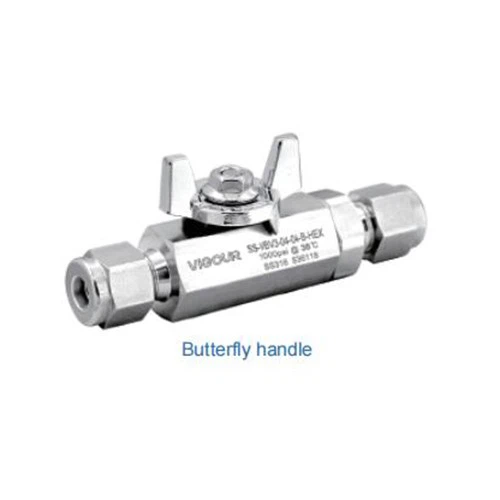
We also supply related products like High Pressure Gas Relief Valve and Stainless Steel Gas Ball Valve. These products work hand - in - hand with our Pressure Gas Needle Valves to provide a complete gas - flow control solution.
Wrapping It Up and Reaching Out
In conclusion, the shape of the valve needle in a Pressure Gas Needle Valve plays a vital role in flow control. Different needle shapes offer different advantages in terms of flow rate control, flow characteristics, pressure handling, and application suitability.
If you're in the market for a Pressure Gas Needle Valve or any of our other products, we'd love to hear from you. We have a team of experts who can help you select the right valve with the appropriate needle shape for your specific needs. Just reach out to us, and we'll be happy to assist you in making the best choice for your gas - flow control requirements.
References
- Smith, J. (2018). "Valve Design and Flow Control Principles". Engineering Press.
- Brown, A. (2020). "Gas Flow Management in Industrial Applications". Industrial Science Journal.
- Green, C. (2019). "Medical Gas Delivery Systems: A Guide to Valve Selection". Medical Technology Review.