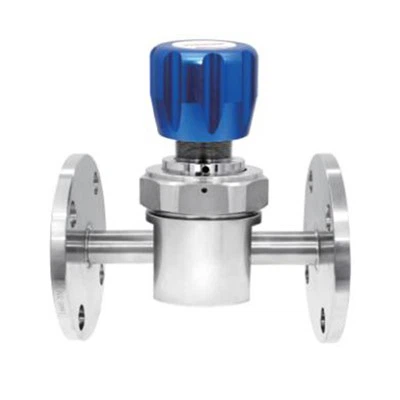
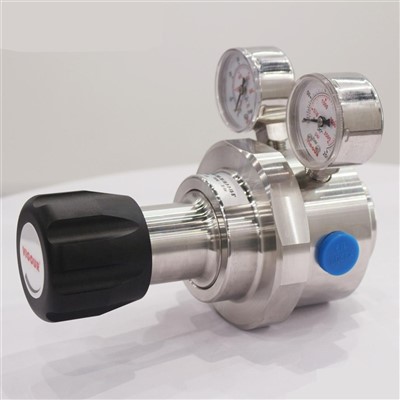
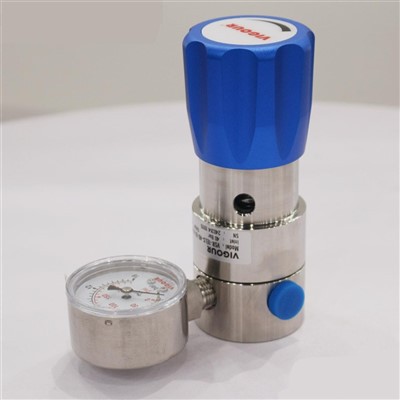
Model
|
VSR-7 |
VSR-8 |
VSR-31 |
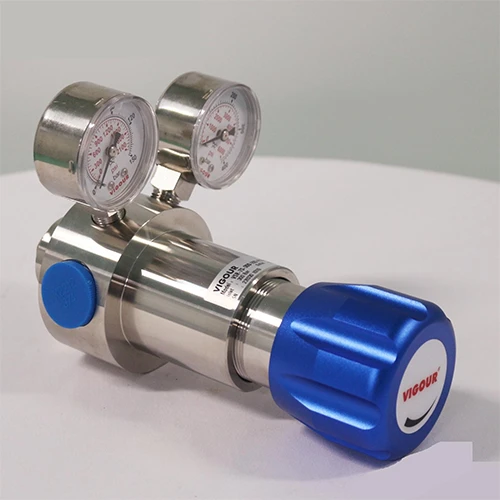


High Pressure Self-venting Regulators VSR-7
Introduction
• High pressure, high flow regulator • Brass chrome plated body and bonnet for inert, reactive, flammable and oxidizing oxidizing gas and mixtures up to grade 6.0 • Stainless steel 316L body for pharmaceutical, food and beverage application • Simple outlet pressure limitation by handwheel • Self-venting standard • Stable outlet pressure • Tested for use with oxygen |
|
Application
• Component Testing • Calibration System • Laboratory Pressure Control • High Pressure Sampling System • Service & Test Equipment |
Technical parameters
| Type | single-stage |
|
| Inlet pressure P1 | max. 300 bar | |
| Outlet pressure P2 | 20/35/50/100/170 bar | |
| Materials | ||
| Body regulator | see ordering info | |
| Valve seat | PCTFE | |
| Filter | SS 316L | |
| O-ring | Viton® (FKM) | |
| Back-up ring | PTFE | |
| Gaskets | PCTFE | |
| Inlets and Outlets | 1/4", 1/2" NPT(F) | |
| 3/4", 1" NPT(F) | ||
| Temperature range | -30℃ to +74℃ | |
| Leak rate | Bubble-tight | |
| Flow capacity | Cv=0.8 | |
| Cv=2.0(HF) | ||
| Weight | 2.9kg | |

Product picture


High Pressure Self-venting Regulators VSR-8
Introduction
• Piston type high pressure regulator • self-venting standard • Brass chrome plated body and bonnet for inert, reactive, flammable and oxidizing oxidizing gas and mixtures up to grade 6.0 • Stainless steel 316L body for pharmaceutical, food and beverage application • 4 ports flexible configuration • Stable outlet pressure • Simple outlet pressure limitation by handwheel • Inlet filter • Tested for use with oxygen
|
|
Application
• Component Testing • Calibration System • Laboratory Pressure Control • High Pressure Sampling System • Service & Test Equipment
|
Technical parameters
| Type | single-stage |
|
| Inlet pressure P1 | Brass max. 400 bar | |
| 316L | max. 400/700 bar | |
| Outlet pressure P2 | 35/50/100/200//300/400 bar | |
| Materials | ||
| Body regulator, relief valve | see ordering info | |
| Main valve seat | Vespel® | |
| Vent valve seat | PCTFE | |
| Piston | SS 316L | |
| O-ring | Viton® (FKM) | |
| (option)Kalrez®(FFKM) | ||
| Filter | SS 316L | |
| Inlets and Outlets | 1/4"NPT (F) | |
| Temperature range | -30℃ to +74℃ | |
| Leak rate | Bubble-tight | |
| Flow cap | Cv=0.06 | |
| Weight | 2.20kg | |

Product picture


High Pressure Self-venting Regulators VSR-31
Introduction:
• Piston sensed for high reliability and long service life
• Brass or Stainless Steel construction
• For pilot type pressure reducing system
• 4 ports flexible configuration
• Stable outlet pressure
• Simple outlet pressure limitation by handwheel
• Adjustable and stoppable ultimate maximum outlet pressure
Application
• Component Testing
• Calibration Systems
• Laboratory Pressure Control
• High Pressure Sampling Systems
• Service & Test Equipment
Technical parameters
| Type | single-stage |
|
| Inlet pressure P1 | max. 300 bar | |
| Outlet pressure P2 | 2/4/8/10/20 bar | |
| Materials | ||
| Body regulator | SS316L | |
| Valve seat | PCTFE | |
| O-ring | Viton® (FKM) | |
| (option)Kalrez® (FFKM) | ||
| Filter | SS 316L | |
| Inlets and Outlets | 1/4" NPT(F) | |
| Temperature range | -30℃ to +74℃ | |
| Leak rate | Bubble-tight | |
| Flow capacity | Cv=0.07 | |
| Weight | approx. 1.30kg | |

High Pressure Self-Venting Regulators User Guide (Explained Simply)
In simple terms, a High Pressure Self-Venting Regulator is the "pressure manager" that safely reduces the high pressure from gas cylinders to the safe working pressure required by your system. It's essential for industries such as gas production, research labs, and even manufacturing processes, where gases are used at high pressures. The regulator automatically vents any excess pressure to keep everything running smoothly and safely.
① Built to Handle Extreme Pressure
These regulators are designed to handle extremely high pressures-up to 5000 psi (about 340 times atmospheric pressure)-and reduce them down to a safer level. We use specially engineered materials like high-grade stainless steel and advanced seals made from PTFE to ensure the regulator withstands pressure without any issues. These materials are chosen because they resist corrosion and maintain structural integrity even under heavy pressure.
② Self-Venting Safety Feature
The self-venting feature is one of the most important aspects of this regulator. If the pressure goes beyond safe levels, the regulator automatically vents excess gas, preventing potential damage or danger. This means you don't need to worry about manual venting-it's all taken care of automatically.
③ Precision Flow Control
Just like a finely tuned engine, the flow control in this regulator ensures a steady and precise flow of gas. Whether you're working with high-precision equipment or critical systems, the regulator's precision is within ±1%, so you can trust that the gas flow is exactly what you need.
④ Safety Standard Features
Pressure Gauge: Tracks pressure in real-time, ensuring you're always aware of the pressure status.
Relief Valve: Automatically vents excess pressure, preventing overpressure situations.
Check Valve: Stops backflow, ensuring your system stays protected from contaminants and damage.
⑤ Versatile for Many Applications
Whether you're dealing with industrial gases, laboratory conditions, or even medical gases, this regulator is designed to meet the specific needs of high-pressure systems. It keeps operations safe and efficient without compromising on performance.
Common Questions - Quick Q&A
Absolutely not! Regular regulators are not built for high pressure and might cause leaks or fail under stress. Using an unsuitable regulator can lead to costly equipment failure or dangerous situations.
Look for these signs:
- Pressure gauge needle fluctuates wildly.
- Frost builds up around the regulator or connections.
- An unusual smell (we add a warning agent to help detect gas leaks). If you notice any of these, contact our customer support immediately.
Not at all! Just follow these basic steps:
- Do: Check for leaks monthly (use test strips).
- Do: Clean connections and vents regularly.
- Do: Record any significant pressure fluctuations.
- Don't: Force the valve open.
- Don't: Disassemble the regulator yourself.
- Don't: Expose the regulator to direct sunlight or extreme temperatures.
Pay attention to these key parameters:
- Inlet pressure (check your cylinder's label).
- Working pressure (confirm with your equipment supplier).
- Flow requirements (check your equipment manual for the specific needs). If you're unsure, snap a photo of the equipment nameplate and send it to us. Our engineers will be happy to guide you in selecting the right model for your needs.
Hot Tags: high pressure self-venting regulators, China high pressure self-venting regulators manufacturers, suppliers, gas regulator for factory, gas regulator for weight, HP Gas Regulators in stock nitrogen, gas regulator for reliability, gas regulator for science, Cylinder Gas Pressure Regulator