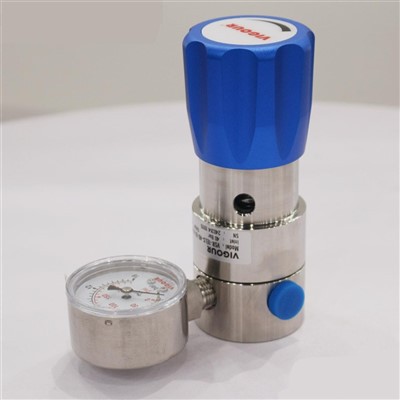
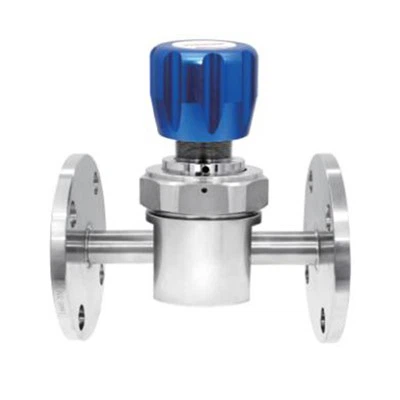
In the realm of fluid control systems, a line pressure regulator stands as a crucial component, playing a multifaceted and indispensable role. As a reputable supplier of line pressure regulators, I am eager to delve into the functions of these devices, exploring their significance in various applications and industries.
Fundamental Function: Pressure Regulation
At its core, the primary function of a line pressure regulator is to maintain a consistent and stable output pressure, regardless of fluctuations in the input pressure or changes in the flow rate of the fluid. This is achieved through a sophisticated mechanism that adjusts the flow of the fluid to ensure that the pressure downstream of the regulator remains within a predefined range.
Consider a scenario in which a high - pressure gas source is supplying gas to a sensitive instrument or a process that requires a specific pressure level. Without a pressure regulator, the varying input pressure from the source could cause damage to the equipment or lead to inconsistent performance. The line pressure regulator acts as a safeguard, precisely controlling the pressure to meet the requirements of the connected system.
Protection of Equipment
One of the key benefits of using a line pressure regulator is the protection it provides to downstream equipment. Many industrial devices, such as valves, pumps, and sensors, are designed to operate within a specific pressure range. Excessive pressure can cause mechanical stress, leading to premature wear and tear, leaks, or even catastrophic failure of the equipment.
For example, in a pneumatic system, if the pressure exceeds the rated capacity of the pneumatic cylinders, it can result in bent rods or damaged seals. A line pressure regulator ensures that the pressure reaching these components is within the safe operating limits, thereby extending the lifespan of the equipment and reducing maintenance costs.
Process Stability
In industrial processes, maintaining a stable pressure is essential for achieving consistent product quality. In chemical manufacturing, for instance, precise pressure control is required during reactions to ensure the correct stoichiometry and reaction rates. A line pressure regulator helps to create a stable environment, minimizing variations in the process parameters and ensuring that the end - product meets the desired specifications.


Similarly, in food and beverage production, accurate pressure regulation is crucial for filling operations. If the pressure is too high, it can cause overfilling of containers, leading to product waste and potential safety hazards. On the other hand, insufficient pressure can result in underfilling, which can affect the quality and marketability of the product.
Flow Control
In addition to pressure regulation, some line pressure regulators can also be used for flow control. By adjusting the pressure drop across the regulator, it is possible to control the flow rate of the fluid. This is particularly useful in applications where a specific flow rate needs to be maintained, such as in irrigation systems or fuel delivery systems.
For example, in an irrigation system, a pressure regulator can be used to ensure that the water is delivered at a consistent pressure and flow rate to each sprinkler head. This helps to achieve uniform watering, preventing over - or under - watering of the plants.
Types of Line Pressure Regulators and Their Applications
There are several types of line pressure regulators available in the market, each designed to meet specific application requirements.
High Pressure Self - venting Regulators
High Pressure Self - venting Regulators are specifically designed for applications where high - pressure fluids need to be regulated. These regulators are capable of handling pressures up to several thousand psi and are commonly used in industries such as oil and gas, aerospace, and high - pressure testing facilities.
The self - venting feature allows the regulator to release excess pressure safely, preventing damage to the system in case of over - pressurization. This makes them ideal for applications where safety is of utmost importance.
Panel Mount Pressure Regulator
Panel Mount Pressure Regulator are designed to be mounted on a control panel, providing easy access for adjustment and monitoring. These regulators are commonly used in laboratory settings, control rooms, and industrial automation systems.
Their compact design and ease of installation make them suitable for applications where space is limited. They can be used to regulate the pressure of gases or liquids in a wide range of processes, from small - scale experiments to large - scale industrial operations.
Dual Stage Gas Pressure Regulator
Dual Stage Gas Pressure Regulator offer enhanced pressure regulation compared to single - stage regulators. They consist of two pressure - reducing stages, which work together to provide a more precise and stable output pressure.
These regulators are commonly used in applications where a high degree of pressure accuracy is required, such as in gas chromatography, fuel cell systems, and medical gas delivery systems. The dual - stage design helps to minimize the effects of input pressure fluctuations and provides a more consistent output pressure over a wide range of flow rates.
Conclusion and Call to Action
In conclusion, the functions of a line pressure regulator are diverse and far - reaching. From protecting equipment and ensuring process stability to controlling flow rates, these devices are essential for the smooth operation of various industrial and commercial systems.
As a leading supplier of line pressure regulators, we offer a wide range of products to meet the diverse needs of our customers. Our regulators are designed and manufactured to the highest standards, ensuring reliability, accuracy, and durability.
If you are in need of a high - quality line pressure regulator for your application, we invite you to contact us for a consultation. Our team of experts will be happy to assist you in selecting the right regulator for your specific requirements and guide you through the purchasing process. Let us work together to optimize your fluid control systems and achieve your operational goals.
References
- "Fluid Mechanics and Hydraulics" by R. L. Daugherty and J. B. Franzini.
- "Industrial Instrumentation and Control" by B. C. Nakra and K. K. Chaudhry.
- "Pneumatic Systems Design and Troubleshooting" by R. A. Lindsey.