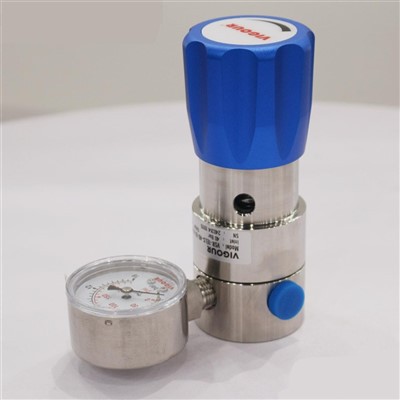
Hey there! As a supplier of Gas Psi Gauges, I've seen firsthand how crucial it is to monitor gas pressure in storage tanks accurately. Today, I'm gonna share with you what I think is the best way to do just that using a psi gauge.
Why Monitoring Gas Pressure is a Big Deal
First off, why bother monitoring gas pressure in the first place? Well, for starters, it's all about safety. Gas stored in tanks can be pretty dangerous if the pressure gets out of whack. Too much pressure can lead to leaks, explosions, or other disasters. On the flip side, too little pressure might mean the gas isn't flowing properly, which can mess up whatever process you're using the gas for.
And it's not just about safety. Monitoring gas pressure can also help you save money. By keeping an eye on the pressure, you can make sure you're using the gas efficiently, which means you won't have to refill the tank as often. Plus, you can catch any issues early on, before they turn into expensive repairs.
How a Psi Gauge Works
So, what exactly is a psi gauge? Psi stands for "pounds per square inch," which is a unit of pressure. A psi gauge is a device that measures the pressure of a gas in a tank and displays it in psi.
Most psi gauges work by using a diaphragm or a Bourdon tube. When the gas in the tank exerts pressure on the diaphragm or tube, it causes it to deform. The gauge then measures this deformation and converts it into a pressure reading.
There are different types of psi gauges out there, including analog and digital gauges. Analog gauges have a needle that moves across a dial to show the pressure, while digital gauges display the pressure as a number on a screen. Both types have their pros and cons, but digital gauges are generally more accurate and easier to read.
The Best Way to Monitor Gas Pressure with a Psi Gauge
Now, let's get to the good stuff: what's the best way to monitor gas pressure in a storage tank with a psi gauge? Here are the steps I recommend:
Step 1: Choose the Right Psi Gauge
The first step is to choose the right psi gauge for your needs. You'll want to consider factors like the type of gas you're storing, the pressure range of the tank, and the accuracy you need.
For example, if you're storing a high-pressure gas like oxygen or nitrogen, you'll need a gauge that can handle high pressures. On the other hand, if you're storing a low-pressure gas like propane or butane, you'll need a gauge that's more sensitive to low pressures.
You'll also want to make sure the gauge is accurate. Look for a gauge that has a high accuracy rating, such as ±0.5% or better. And don't forget to choose a gauge that's compatible with the type of gas you're storing. Some gases can react with certain materials, so you'll need to make sure the gauge is made from a material that's resistant to corrosion.
Step 2: Install the Psi Gauge Correctly
Once you've chosen the right psi gauge, the next step is to install it correctly. This is really important, because if the gauge isn't installed properly, it won't give you an accurate reading.
Here are some tips for installing a psi gauge:
- Choose the Right Location: The gauge should be installed in a location where it's easy to read and access. It should also be installed away from any sources of heat or vibration, which can affect the accuracy of the reading.
- Use the Right Fittings: Make sure you use the right fittings to connect the gauge to the tank. The fittings should be compatible with the type of gas you're storing and the pressure range of the tank.
- Follow the Manufacturer's Instructions: Always follow the manufacturer's instructions when installing the gauge. This will ensure that the gauge is installed correctly and that it's safe to use.
Step 3: Calibrate the Psi Gauge Regularly
Even the most accurate psi gauge can lose its accuracy over time. That's why it's important to calibrate the gauge regularly. Calibration involves comparing the reading on the gauge to a known standard and adjusting the gauge if necessary.
You should calibrate your psi gauge at least once a year, or more often if you're using it in a high-stress environment. You can calibrate the gauge yourself using a calibration kit, or you can have it calibrated by a professional.
Step 4: Monitor the Gas Pressure Regularly
Once the psi gauge is installed and calibrated, the next step is to monitor the gas pressure regularly. You should check the pressure at least once a day, or more often if you're using the gas frequently.
If you notice any changes in the pressure, such as a sudden increase or decrease, you should investigate the cause immediately. It could be a sign of a leak, a malfunction in the tank, or some other problem.


Step 5: Take Action if Necessary
If you notice any problems with the gas pressure, you should take action immediately. Here are some steps you can take:
- Check for Leaks: If the pressure is dropping, it could be a sign of a leak. Check the tank and the connections for any signs of leakage, such as hissing sounds or bubbles. If you find a leak, you should shut off the gas supply and repair the leak as soon as possible.
- Check the Tank: If the pressure is rising, it could be a sign of a problem with the tank. Check the tank for any signs of damage, such as dents or cracks. If you find any damage, you should stop using the tank and have it inspected by a professional.
- Contact a Professional: If you're not sure what's causing the problem, or if you're unable to fix it yourself, you should contact a professional. A qualified technician can diagnose the problem and recommend the best course of action.
Other Accessories to Consider
In addition to a psi gauge, there are other accessories you might want to consider to help you monitor and manage the gas pressure in your storage tank. Here are a few examples:
- Co2 Gas Heater: If you're storing carbon dioxide gas, a Co2 Gas Heater can help maintain a consistent pressure by heating the gas. This is especially important in cold weather, when the gas can contract and cause the pressure to drop.
- High Purity Gas Filter: A High Purity Gas Filter can help remove impurities from the gas, which can improve the accuracy of the pressure reading and prevent damage to the equipment.
- Gas Alarm System: A Gas Alarm System can alert you if the gas pressure in the tank exceeds a certain level or if there's a leak. This can help you take action quickly and prevent any potential disasters.
Conclusion
Monitoring the gas pressure in a storage tank with a psi gauge is an important part of ensuring safety and efficiency. By choosing the right gauge, installing it correctly, calibrating it regularly, monitoring the pressure, and taking action if necessary, you can keep your gas storage system running smoothly.
If you're in the market for a Gas Psi Gauge or any of the accessories I mentioned, I'd love to help. We've got a wide range of high-quality products to suit your needs, and our team of experts is always on hand to provide you with advice and support. So, don't hesitate to get in touch if you have any questions or if you're ready to place an order.
References
- "Gas Pressure Monitoring: Best Practices and Standards." Industrial Gas Journal.
- "How to Choose the Right Psi Gauge for Your Application." Pressure Gauge Manufacturer's Handbook.
- "The Importance of Regular Calibration for Pressure Gauges." Calibration Magazine.