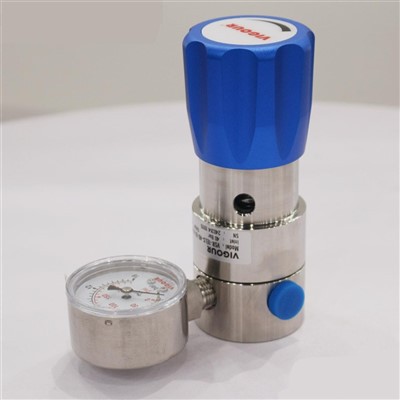
As a supplier of Ultra-High Purity (UHP) Diaphragm Valves, I am often asked about the customization options available for these specialized valves. UHP Diaphragm Valves are critical components in various industries, including semiconductor manufacturing, pharmaceutical production, and high-purity gas delivery systems. They are designed to provide precise control and isolation of fluids while maintaining the highest level of purity. In this blog post, I will explore the different customization options for UHP Diaphragm Valves and how they can be tailored to meet the specific needs of our customers.
Body Material Selection
The choice of body material is a fundamental customization option for UHP Diaphragm Valves. The body material must be compatible with the fluid being handled and the operating environment. Common materials used for UHP Diaphragm Valve bodies include stainless steel, such as 316L, which offers excellent corrosion resistance and is widely used in high-purity applications. Other materials, such as PTFE (Polytetrafluoroethylene) and PVDF (Polyvinylidene Fluoride), are also available for applications where chemical resistance is a primary concern.
Stainless steel bodies are typically electropolished to a high surface finish, which helps to minimize particle generation and adsorption. This is crucial in applications where even the smallest particles can cause contamination. PTFE and PVDF bodies, on the other hand, are known for their exceptional chemical resistance and are often used in aggressive chemical environments.
Diaphragm Material and Design
The diaphragm is the heart of the UHP Diaphragm Valve, and its material and design play a crucial role in the valve's performance. Diaphragms are available in a variety of materials, including PTFE, EPDM (Ethylene Propylene Diene Monomer), and FFKM (Perfluoroelastomer). Each material has its own unique properties, such as chemical resistance, temperature resistance, and flexibility.
PTFE diaphragms are widely used in UHP applications due to their excellent chemical resistance and low outgassing properties. They are suitable for a wide range of fluids, including acids, bases, and solvents. EPDM diaphragms, on the other hand, offer good resistance to water, steam, and many common chemicals. They are often used in applications where cost is a factor and chemical resistance requirements are not as stringent. FFKM diaphragms are the most chemically resistant option and can withstand extreme temperatures and aggressive chemicals. They are typically used in high-performance applications where the highest level of chemical resistance is required.
In addition to material selection, the design of the diaphragm can also be customized. Diaphragms can be designed with different shapes and thicknesses to optimize valve performance. For example, a thicker diaphragm may be used in applications where higher pressure ratings are required, while a thinner diaphragm may be used for applications where faster response times are needed.
End Connection Types
UHP Diaphragm Valves can be customized with different end connection types to suit the specific installation requirements of our customers. Common end connection types include butt weld, socket weld, NPT (National Pipe Thread), and sanitary fittings.
Butt weld connections are commonly used in high-purity applications where a permanent, leak-tight connection is required. They provide a smooth, continuous flow path and minimize the risk of contamination. Socket weld connections are similar to butt weld connections but are easier to install and are often used in smaller diameter valves.
NPT connections are a popular choice for general-purpose applications where a threaded connection is required. They are easy to install and can be used with a variety of piping materials. Sanitary fittings, such as tri-clamp and I-line fittings, are commonly used in the pharmaceutical and food industries where cleanliness and ease of cleaning are critical.
Actuation Options
UHP Diaphragm Valves can be actuated manually or automatically. Manual actuation is suitable for applications where the valve is operated infrequently or where a simple, cost-effective solution is required. Automatic actuation, on the other hand, is used in applications where remote control or automated process control is needed.
Common types of automatic actuators include pneumatic, electric, and hydraulic actuators. Pneumatic actuators are the most widely used type of actuator for UHP Diaphragm Valves. They are reliable, cost-effective, and can provide fast response times. Electric actuators are suitable for applications where precise control and positioning are required. They are often used in applications where a high level of automation is needed. Hydraulic actuators are typically used in applications where high force is required, such as in large-diameter valves or in applications with high-pressure requirements.
Special Features and Accessories
In addition to the basic customization options mentioned above, UHP Diaphragm Valves can also be customized with a variety of special features and accessories. These features and accessories can enhance the valve's performance, functionality, and ease of use.
Some common special features include position indicators, which provide visual indication of the valve's open or closed position; limit switches, which can be used to control the valve's operation and provide feedback to a control system; and lockout devices, which prevent unauthorized operation of the valve.


Accessories such as filters, regulators, and solenoid valves can also be added to the valve to improve its performance and functionality. For example, a filter can be installed upstream of the valve to remove particles and contaminants from the fluid, while a regulator can be used to control the pressure of the fluid.
Conclusion
As a supplier of UHP Diaphragm Valves, we understand that every customer has unique requirements. That's why we offer a wide range of customization options to ensure that our valves meet the specific needs of each application. Whether you need a valve with a specific body material, diaphragm design, end connection type, actuation option, or special feature, we can work with you to create a customized solution.
If you are interested in learning more about our UHP Diaphragm Valves or would like to discuss your specific requirements, please [contact us for procurement and negotiation]. We look forward to working with you to find the perfect valve solution for your application.
References
- "High Pressure Diaphragm Valve." /hp-valves/high-pressure-diaphragm-valve.html
- "High Pressure Gas Check Valve." /hp-valves/high-pressure-gas-check-valve.html
- "Stainless Steel Gas Ball Valve." /hp-valves/stainless-steel-gas-ball-valve.html