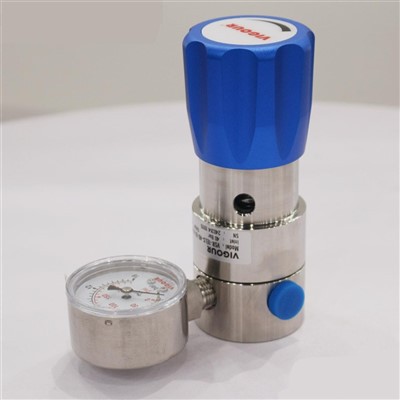
Yo, what's up! I'm a supplier of Gas Psi Gauges, and today I wanna chat about how the gas flow rate affects a gas psi gauge reading. It's a topic that's super important for anyone working with gases, whether you're in a lab, an industrial setting, or just a hobbyist.
Let's start with the basics. A gas psi gauge is used to measure the pressure of a gas. Psi stands for pounds per square inch, and it gives us an idea of how much force the gas is exerting on the walls of its container. The flow rate, on the other hand, is how much gas is moving through a system in a given amount of time.
Now, you might be thinking, "Why does the flow rate matter? Isn't the pressure the main thing?" Well, it turns out that the flow rate can have a big impact on the pressure reading on your gauge. Here's how it works.
The Relationship between Gas Flow Rate and Pressure
When gas is flowing through a system, there are a few things going on that can affect the pressure. One of the main factors is friction. As the gas moves through pipes, valves, and other components, it rubs against the walls, creating friction. This friction causes a drop in pressure, known as a pressure drop.
The higher the flow rate, the more friction there is, and the greater the pressure drop. So, if you have a high flow rate of gas moving through your system, you might see a lower pressure reading on your gauge than you would if the flow rate was lower.
Another factor that can affect the pressure is the compressibility of the gas. Most gases are compressible, which means they can be squeezed into a smaller space. When the flow rate is high, the gas is moving quickly, and there's less time for it to compress. This can also lead to a lower pressure reading on your gauge.
Let's take a look at an example to see how this works in real life. Say you have a gas cylinder connected to a regulator and a psi gauge. You open the valve on the cylinder, and gas starts flowing through the system. At first, the flow rate is low, and the pressure reading on the gauge is stable. But as you increase the flow rate, you might notice that the pressure reading starts to drop.
This is because the higher flow rate is causing more friction and less compression of the gas, resulting in a lower pressure reading. It's important to keep this in mind when using a gas psi gauge, as it can affect the accuracy of your measurements.
Measuring and Controlling Gas Flow Rate
So, how can you measure and control the gas flow rate to ensure accurate pressure readings? One way is to use a flow meter. A flow meter is a device that measures the flow rate of a gas. There are several types of flow meters available, including mass flow meters, volumetric flow meters, and thermal flow meters.
Once you know the flow rate of your gas, you can adjust it to maintain a stable pressure. This can be done using a regulator or a flow control valve. A regulator is a device that reduces the pressure of the gas from the cylinder to a safe and usable level. A flow control valve, on the other hand, allows you to adjust the flow rate of the gas.
By using a flow meter and a regulator or flow control valve, you can ensure that the gas flow rate is within the recommended range for your system, and that you're getting accurate pressure readings on your gauge.
The Importance of Accurate Pressure Readings
Accurate pressure readings are crucial in many applications. In industrial settings, for example, precise pressure control is necessary to ensure the safety and efficiency of processes. If the pressure is too high, it can cause equipment failure, leaks, or even explosions. If the pressure is too low, it can result in poor performance or incomplete reactions.
In the medical field, accurate pressure readings are essential for delivering the right amount of oxygen or other gases to patients. In laboratories, precise pressure control is necessary for conducting experiments and obtaining reliable results.

As a Gas Psi Gauge supplier, I understand the importance of providing high-quality gauges that can provide accurate pressure readings. That's why I offer a wide range of gauges that are designed to meet the needs of different applications.
Our Gas Psi Gauges
Our gas psi gauges are made from high-quality materials and are built to last. They're designed to provide accurate and reliable pressure readings, even in harsh environments. We offer a variety of gauges, including analog and digital models, with different ranges and accuracy levels.
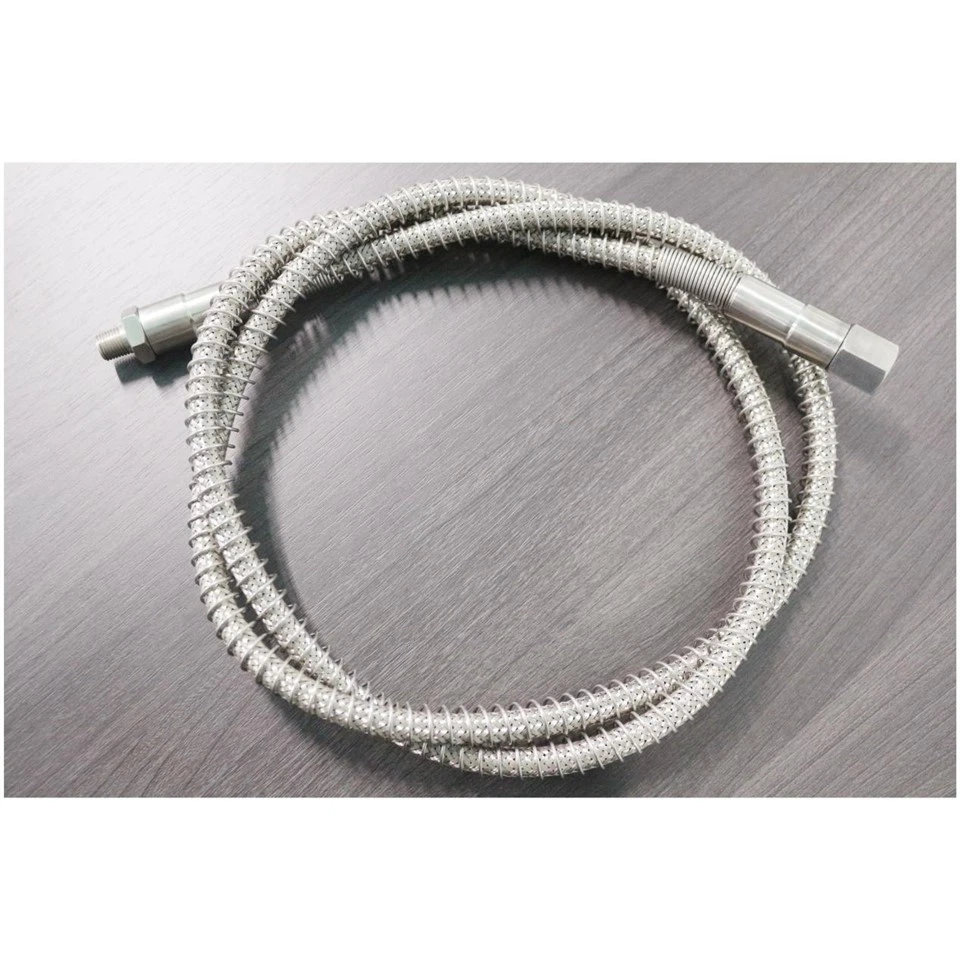
In addition to our gauges, we also offer a range of accessories to help you measure and control the gas flow rate. These include Co2 Gas Heater, High Purity Gas Filter, and Gas High Pressure Hoses. These accessories can help improve the performance and accuracy of your gas system.
Conclusion
In conclusion, the gas flow rate can have a significant impact on a gas psi gauge reading. Friction and compressibility are two of the main factors that can cause a pressure drop, resulting in a lower pressure reading on your gauge. By understanding how these factors work and using the right tools to measure and control the flow rate, you can ensure accurate pressure readings and optimal performance of your gas system.
If you're in the market for a gas psi gauge or any of our accessories, I'd love to hear from you. We offer high-quality products at competitive prices, and our team of experts is always available to help you find the right solution for your needs. So, don't hesitate to reach out and start a conversation about your requirements.
References
- Perry, R. H., & Green, D. W. (1997). Perry's Chemical Engineers' Handbook (7th ed.). McGraw-Hill.
- Crane Co. (1988). Flow of Fluids Through Valves, Fittings, and Pipe (Technical Paper No. 410). Crane Co.
- Incropera, F. P., & DeWitt, D. P. (2002). Fundamentals of Heat and Mass Transfer (5th ed.). John Wiley & Sons.