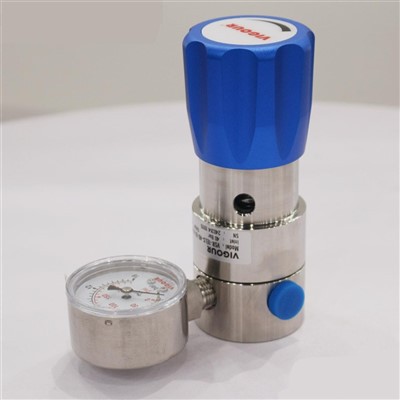
Hey there! As a supplier of HP connectors, I often get asked a bunch of questions about where and how our products can be used. One question that pops up quite a bit is, "Can I use HP connectors in a marine environment?" Well, let's dig into this topic and find out.
First off, let's talk about what HP connectors are. We've got a wide range of them, like Quick Release Gas Connectors, Tube Fitting Adaptor, and Cylinder Connectors. These connectors are designed to handle high - pressure situations and are used in various industries for different applications.
The marine environment is a tough one. It's full of saltwater, which is extremely corrosive. The constant exposure to salt spray, high humidity, and rough weather conditions can really take a toll on equipment. So, when considering using HP connectors in this environment, we need to look at a few key factors.


Material and Corrosion Resistance
The materials used in our HP connectors play a huge role in their ability to withstand the marine environment. We use high - quality materials that are chosen for their corrosion - resistant properties. For example, some of our connectors are made from stainless steel. Stainless steel is known for its excellent resistance to rust and corrosion, especially in saltwater environments. It forms a thin, protective oxide layer on its surface that prevents the metal from further reacting with the corrosive elements in the marine environment.
But it's not just about the base material. We also apply special coatings to some of our connectors. These coatings add an extra layer of protection against corrosion. They act as a barrier between the connector and the saltwater, preventing direct contact and reducing the risk of corrosion. However, it's important to note that the effectiveness of these coatings can depend on the thickness and quality of the application.
Sealing and Water Ingress
In the marine environment, water ingress is a major concern. If water gets into the connectors, it can cause electrical shorts, damage the internal components, and reduce the overall performance of the system. That's why our HP connectors are designed with high - quality seals.
These seals are made from materials that are resistant to water and can withstand the pressure changes that occur in the marine environment. They are engineered to provide a tight, leak - free connection. For example, some of our connectors use O - rings. O - rings are circular seals that are placed between the mating parts of the connector. They create a watertight seal that prevents water from entering the connector.
We also test our connectors rigorously to ensure that they meet strict sealing standards. We simulate the harsh marine conditions in our testing facilities, subjecting the connectors to high - pressure water sprays and submersion tests. Only the connectors that pass these tests are approved for use in marine applications.
Mechanical Durability
The marine environment is full of vibrations, shocks, and mechanical stresses. Boats are constantly moving, and the equipment on board is subjected to rough seas and sudden impacts. Our HP connectors need to be able to withstand these mechanical forces without losing their functionality.
We design our connectors with robust mechanical structures. The connectors are built to be strong and durable, with reinforced housings and well - engineered mating mechanisms. For example, the locking mechanisms in our connectors are designed to stay secure even under high - vibration conditions. This ensures that the connectors remain connected and functional, even in the most challenging marine environments.
Compatibility with Marine Systems
Another important factor is the compatibility of our HP connectors with the existing marine systems. Marine systems often have specific requirements in terms of pressure ratings, flow rates, and connection sizes. Our connectors are designed to be versatile and can be customized to meet these requirements.
We work closely with our customers to understand their specific needs. Whether it's a small pleasure boat or a large commercial vessel, we can provide connectors that are tailored to the particular application. We can adjust the pressure ratings, modify the connection sizes, and ensure that the connectors are compatible with the other components in the marine system.
Maintenance and Inspection
Even with the best - designed connectors, regular maintenance and inspection are essential in the marine environment. Saltwater can gradually wear down the protective coatings and seals over time. That's why we recommend that our customers perform regular inspections of their connectors.
During these inspections, they should check for signs of corrosion, damage to the seals, and any loose connections. If any issues are found, they can be addressed promptly. For example, if the protective coating on a connector shows signs of wear, it can be reapplied. If a seal is damaged, it can be replaced.
Real - World Applications
There are already many real - world applications where our HP connectors are being used successfully in the marine environment. For example, on fishing boats, our connectors are used in the hydraulic systems. These systems are responsible for operating the fishing equipment, such as the winches and the net - handling devices. The connectors need to be able to withstand the constant movement of the boat and the high - pressure hydraulic fluids.
On larger commercial vessels, our connectors are used in the electrical systems. They provide a reliable connection for the various electrical components on board, such as the navigation lights, communication systems, and power distribution units. In these applications, the connectors need to be able to handle the electrical loads while remaining protected from the harsh marine environment.
Limitations and Considerations
While our HP connectors are designed to be suitable for the marine environment, there are still some limitations. For example, in extremely harsh and polluted marine areas, where the water contains high levels of contaminants in addition to salt, the connectors may face more challenges. In these cases, more frequent maintenance and inspections may be required.
Also, the installation of the connectors is crucial. Improper installation can compromise the performance of the connectors. It's important to follow the installation instructions carefully, ensuring that the connectors are properly aligned, tightened, and sealed.
Conclusion
So, can you use our HP connectors in a marine environment? The answer is yes, in most cases. Our connectors are designed with the marine environment in mind, with features like corrosion - resistant materials, high - quality seals, and robust mechanical structures. However, it's important to consider the specific requirements of your application and to perform regular maintenance and inspections.
If you're in the marine industry and are looking for reliable HP connectors, we'd love to hear from you. We have a team of experts who can help you choose the right connectors for your specific needs. Whether you're building a new boat or upgrading an existing system, we can provide you with the solutions you need. Just reach out to us, and we'll be happy to start a conversation about your HP connector requirements. Let's work together to ensure that your marine systems are equipped with the best - in - class connectors.
References
- "Marine Corrosion and Its Prevention" - A comprehensive guide on the corrosion issues in the marine environment and the methods to prevent them.
- "Materials Science for Engineering Applications" - A textbook that provides in - depth knowledge about the properties and applications of different engineering materials, including those used in HP connectors.
- "Sealing Technology in Harsh Environments" - A research paper that focuses on the design and performance of seals in challenging environments, such as the marine environment.