


Hey there! As a supplier of HP valves, I've seen firsthand how these little powerhouses interact with other components in a system. It's like a well - choreographed dance where every move matters. Let's dive in and explore this fascinating world.
Basics of HP Valves
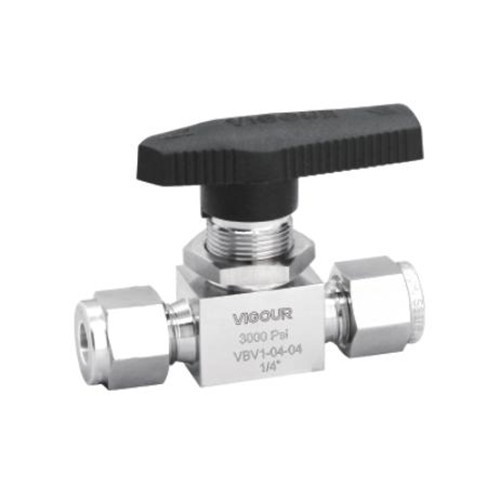
First off, HP valves, or high - pressure valves, are designed to handle extreme pressures. They're used in a bunch of industries, from oil and gas to manufacturing and even aerospace. These valves control the flow of fluids or gases under high - pressure conditions, making sure everything runs smoothly and safely.
Interaction with Pumps
Pumps are often the heart of a fluid or gas system, pushing the substance through the pipes. HP valves work hand - in - hand with pumps. When a pump is operating, it builds up pressure. HP valves are there to regulate this pressure. For example, if the pressure from the pump gets too high, a High Pressure Gas Relief Valve will open up. This allows some of the fluid or gas to escape, preventing damage to the pump and other components in the system. It's like a safety valve, quite literally! On the other hand, when the pump is starting up or shutting down, HP valves can also help in controlling the flow rate. They can gradually open or close to ensure a smooth transition and avoid sudden pressure spikes that could cause problems.

Connection with Filters
Filters are crucial for keeping the fluid or gas clean. HP valves and filters interact in a way that ensures the filtration process works efficiently. Before the fluid or gas reaches the filter, an HP valve can control the flow rate. This is important because if the flow is too fast, the filter might not be able to do its job properly. By adjusting the flow, the HP valve allows the filter to trap contaminants effectively. Also, after the filtration process, another HP valve can be used to control the flow of the clean fluid or gas back into the system. If there's a clog in the filter, the pressure on the upstream side will increase. An HP valve can sense this pressure change and take action, like diverting the flow or triggering an alarm.
Synergy with Pressure Gauges
Pressure gauges are like the eyes of the system, giving us a clear picture of the pressure levels. HP valves and pressure gauges work together closely. Pressure gauges constantly monitor the pressure in different parts of the system. When the pressure readings reach a certain threshold, the HP valve kicks into action. For instance, if a pressure gauge shows that the pressure in a pipeline is getting too high, it sends a signal (either electronically or through a mechanical linkage) to the HP valve. The valve then adjusts its position to either reduce the pressure by allowing some fluid or gas to escape or by restricting the flow to prevent further pressure build - up. This real - time communication between the pressure gauge and the HP valve is essential for maintaining a stable and safe system.
Working with Flow Meters
Flow meters measure the volume or mass of the fluid or gas flowing through a pipe. HP valves and flow meters interact to control the flow rate accurately. A flow meter provides data on how much fluid or gas is moving. Based on this information, an HP valve can be adjusted. If the flow rate is too low and we need more fluid or gas to reach a certain part of the system, the HP valve can open wider. Conversely, if the flow rate is too high and might cause issues like erosion or over - pressure, the valve can close slightly. This interaction is especially important in processes where precise flow control is required, such as in chemical manufacturing or food and beverage production.
Coordination with Tanks
Tanks are used to store fluids or gases in a system. HP valves play a key role in managing the transfer of substances to and from the tanks. When filling a tank, an HP valve controls the flow rate to prevent over - filling. It ensures that the tank doesn't get too much pressure from the incoming fluid or gas. When it's time to empty the tank, another HP valve regulates the flow out of the tank. This is important for maintaining a consistent pressure in the tank and the downstream components. For example, in a high - pressure gas storage tank, a High Pressure Gas Check Valve can be used to prevent backflow and ensure that the gas only flows in the desired direction.
Interaction with Piping Systems
Piping systems are the arteries of a fluid or gas system. HP valves are installed at various points in the piping to control the flow and pressure. They can isolate different sections of the pipeline for maintenance or in case of an emergency. For example, if there's a leak in a certain part of the pipeline, an HP valve can be closed to stop the flow in that area, preventing further leakage and damage. Also, HP valves can be used to direct the flow to different branches of the piping system. This is useful in complex systems where different processes require different amounts of fluid or gas at different times.
Role in Heat Exchangers
Heat exchangers are used to transfer heat between two fluids or gases. HP valves are involved in ensuring that the heat exchange process works efficiently. They control the flow of the fluids or gases through the heat exchanger. By adjusting the flow rate, the HP valve can optimize the heat transfer. If the flow is too fast, there might not be enough time for proper heat exchange. If the flow is too slow, it could lead to over - heating or under - cooling. HP valves can also be used to isolate the heat exchanger for maintenance or in case of a malfunction.
Impact on Control Systems
In modern systems, control systems are used to automate the operation of various components. HP valves are an integral part of these control systems. They can be controlled electronically or pneumatically based on signals from the control system. The control system takes inputs from different sensors, like pressure gauges, flow meters, and temperature sensors. Based on these inputs, it sends commands to the HP valves to adjust their positions. This allows for precise and real - time control of the system. For example, in a large industrial plant, the control system can adjust multiple HP valves simultaneously to maintain the optimal operating conditions across the entire system.
The Importance of Compatibility
It's crucial to note that for all these interactions to work smoothly, the HP valves need to be compatible with other components in the system. This means considering factors like the material of the valve, its pressure and temperature ratings, and its connection type. For example, if we're using a Stainless Steel Gas Ball Valve in a system that handles corrosive gases, the stainless - steel material ensures that the valve won't corrode and can interact effectively with other components over a long period.
Conclusion
As you can see, HP valves are an essential part of any system that deals with high - pressure fluids or gases. Their interaction with other components is complex but vital for the smooth, safe, and efficient operation of the system. Whether it's working with pumps, filters, pressure gauges, or any other component, HP valves play a crucial role in maintaining control and preventing damage.
If you're in the market for high - quality HP valves or want to learn more about how they can fit into your system, I'd love to have a chat with you. Feel free to reach out and start a discussion about your specific needs. We can explore the best solutions together and ensure that your system runs at its best.
References
- "Handbook of Valves for Process Industries"
- "Principles of Fluid Mechanics and Thermodynamics in Engineering Systems"
- Industry - specific technical manuals and guidelines related to high - pressure systems.


