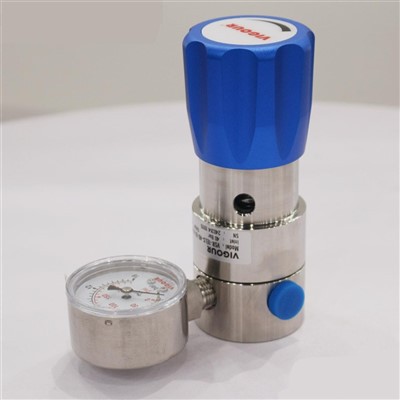
A pressure regulator gas stick is a crucial device in various industries, designed to control and maintain a consistent gas pressure. As a supplier of pressure regulator gas sticks, I have witnessed firsthand the importance and functionality of these devices. In this blog post, I will delve into how a pressure regulator gas stick works, its applications, and why it is an essential component in many gas-related systems.
Basic Principles of a Pressure Regulator Gas Stick
At its core, a pressure regulator gas stick operates on the principle of balancing forces to control gas pressure. It consists of several key components, including an inlet, an outlet, a diaphragm, a spring, and a valve. The inlet is connected to the gas source, which typically has a high and variable pressure. The outlet, on the other hand, is connected to the equipment or system that requires a stable gas pressure.
When gas enters the regulator through the inlet, it exerts pressure on the diaphragm. The diaphragm is a flexible membrane that separates the gas chamber from the spring chamber. The spring in the spring chamber provides a counterforce to the gas pressure acting on the diaphragm. The tension of the spring can be adjusted, which allows for the regulation of the outlet pressure.
As the gas pressure on the diaphragm increases, it causes the diaphragm to move. This movement is transmitted to the valve, which is connected to the diaphragm. The valve controls the flow of gas from the inlet to the outlet. If the gas pressure on the diaphragm exceeds the force exerted by the spring, the valve will close slightly, reducing the flow of gas and thus lowering the outlet pressure. Conversely, if the gas pressure on the diaphragm is lower than the spring force, the valve will open wider, allowing more gas to flow and increasing the outlet pressure.
This continuous adjustment of the valve position ensures that the outlet pressure remains relatively constant, regardless of fluctuations in the inlet pressure or changes in the gas flow rate. The pressure regulator gas stick essentially acts as a buffer between the high-pressure gas source and the equipment that requires a stable gas supply.
Types of Pressure Regulator Gas Sticks
There are different types of pressure regulator gas sticks available, each designed to meet specific requirements. Some of the common types include:
Food Industrial Use Gas Pressure Regulator
This type of regulator is specifically designed for use in the food industry. It is often required to meet strict hygiene and safety standards. The Food Industrial Use Gas Pressure Regulator ensures that the gas used in food processing, such as natural gas or propane, is supplied at a consistent and safe pressure. This is crucial for maintaining the quality and safety of food products.
High Purity Gas Regulator
High purity gas regulators are used when a very pure gas supply is required. They are commonly used in industries such as semiconductor manufacturing, pharmaceuticals, and analytical laboratories. The High Purity Gas Regulator is designed to minimize contamination and ensure that the gas remains pure throughout the regulation process. It often features special materials and construction techniques to prevent the adsorption and release of impurities.
Medical Gas Pressure Regulator
Medical gas pressure regulators are used in healthcare facilities to control the pressure of gases such as oxygen, nitrogen, and nitrous oxide. These gases are used for various medical applications, including anesthesia, respiratory therapy, and surgical procedures. The Medical Gas Pressure Regulator must be highly reliable and accurate to ensure the safety and well-being of patients. It is often subject to strict regulatory requirements and regular maintenance.
Applications of Pressure Regulator Gas Sticks
Pressure regulator gas sticks are used in a wide range of applications across various industries. Some of the common applications include:
Industrial Manufacturing
In industrial manufacturing processes, such as welding, heat treating, and chemical processing, a stable gas pressure is essential for consistent product quality. Pressure regulator gas sticks are used to control the pressure of gases such as oxygen, acetylene, and argon, ensuring that the welding or processing operations are carried out accurately and safely.
Laboratory Research
In laboratories, precise control of gas pressure is crucial for many experiments and analytical techniques. Gas chromatography, for example, requires a stable gas flow and pressure to separate and analyze chemical compounds. Pressure regulator gas sticks are used to provide a constant supply of carrier gas at the required pressure.
Residential and Commercial Heating
In residential and commercial heating systems, pressure regulator gas sticks are used to control the flow of natural gas or propane to the burners. This ensures that the heating system operates efficiently and safely, providing a consistent and comfortable indoor temperature.


Advantages of Using a Pressure Regulator Gas Stick
There are several advantages to using a pressure regulator gas stick:
Safety
One of the primary advantages is safety. By maintaining a stable gas pressure, the pressure regulator gas stick reduces the risk of overpressure, which can lead to equipment damage, gas leaks, or even explosions. It also helps to prevent underpressure, which can cause incomplete combustion or other operational problems.
Equipment Protection
A stable gas pressure protects the equipment that uses the gas. Fluctuations in gas pressure can cause wear and tear on the equipment, leading to premature failure. The pressure regulator gas stick ensures that the equipment receives a consistent gas supply, extending its lifespan and reducing maintenance costs.
Process Consistency
In industrial and laboratory applications, a stable gas pressure is essential for consistent process results. Whether it is a manufacturing process or a scientific experiment, the pressure regulator gas stick helps to ensure that the gas supply remains constant, leading to more reliable and reproducible outcomes.
Choosing the Right Pressure Regulator Gas Stick
When choosing a pressure regulator gas stick, several factors need to be considered:
Pressure Range
The pressure range of the regulator should match the requirements of the application. It is important to select a regulator that can handle the maximum and minimum inlet and outlet pressures.
Gas Compatibility
The regulator must be compatible with the type of gas being used. Different gases have different chemical properties, and some gases may react with certain materials used in the regulator. It is crucial to choose a regulator that is made from materials that are resistant to the gas being regulated.
Flow Rate
The flow rate of the gas also needs to be considered. The regulator should be able to handle the required gas flow rate without causing significant pressure drops.
Conclusion
In conclusion, a pressure regulator gas stick is a vital device that plays a crucial role in maintaining a stable gas pressure in various applications. Its ability to balance forces and adjust the valve position ensures that the outlet pressure remains constant, regardless of fluctuations in the inlet pressure or changes in the gas flow rate. As a supplier of pressure regulator gas sticks, I understand the importance of providing high-quality and reliable products.
If you are in need of a pressure regulator gas stick for your specific application, I encourage you to reach out to discuss your requirements. Our team of experts can help you choose the right regulator and provide you with the necessary support and guidance. Whether it is for the food industry, high purity gas applications, or medical use, we have the expertise and products to meet your needs.
References
- Smith, J. (2018). Gas Pressure Regulation: Principles and Applications. New York: Industrial Press.
- Johnson, A. (2020). Handbook of Gas Regulators. London: Elsevier.
- Brown, C. (2019). Safety Considerations in Gas Pressure Regulation. Journal of Safety Engineering, 15(2), 45-52.