


When it comes to industrial applications, the choice of valves is crucial, especially in high - pressure and high - temperature environments. As a Pressure Gas Needle Valve supplier, I often encounter questions from customers about whether our Pressure Gas Needle Valves can be used in such harsh conditions. In this blog, I will delve into this topic and provide in - depth analysis.
Understanding Pressure Gas Needle Valves
Pressure Gas Needle Valves are precision valves designed to control the flow of gases. They feature a long, tapered needle that fits into a seat, allowing for fine - tuned flow regulation. These valves are commonly used in applications where accurate control of gas flow is required, such as in laboratory equipment, gas chromatography, and some industrial gas systems.
The construction of a Pressure Gas Needle Valve typically involves high - quality materials. The body is often made of stainless steel, brass, or other corrosion - resistant alloys, which can withstand the corrosive nature of some gases. The needle and seat are also engineered to provide a tight seal, preventing gas leakage.
High - Pressure Environments
High - pressure environments pose significant challenges to valves. The forces exerted on the valve components can be immense, and any weakness in the design or material can lead to failure.
Material Strength
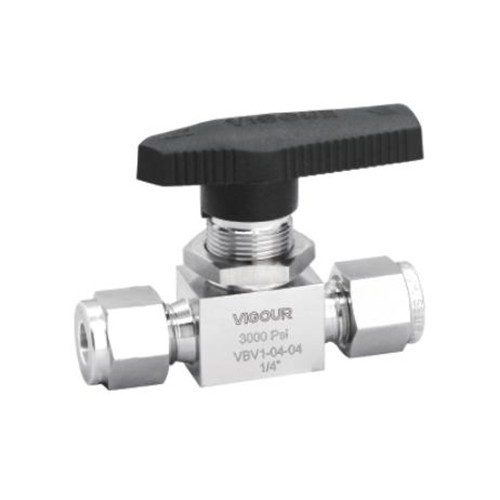
In high - pressure situations, the material of the Pressure Gas Needle Valve must have sufficient strength. Stainless steel is a popular choice for high - pressure applications due to its high tensile strength and good corrosion resistance. For example, some of our Pressure Gas Needle Valves are made of 316 stainless steel, which can withstand pressures up to several thousand pounds per square inch (psi). The high - strength material ensures that the valve body and internal components can resist deformation under high pressure.

Seal Integrity
Another critical aspect is the seal integrity. The needle and seat of the Pressure Gas Needle Valve must form a tight seal to prevent gas leakage. In high - pressure environments, the seal can be compromised if the materials are not properly selected or the design is not optimized. Our valves are designed with precision - machined seats and needles, and we use high - quality sealing materials such as PTFE (polytetrafluoroethylene). PTFE has excellent chemical resistance and can maintain its sealing properties under high pressure.
Design Considerations
The design of the valve also plays a crucial role in high - pressure applications. The valve body should be designed to distribute the pressure evenly across its components. For example, our Pressure Gas Needle Valves have a streamlined design that reduces stress concentrations, which helps to prevent cracking or failure under high pressure.
High - Temperature Environments
High - temperature environments can also have a significant impact on the performance of Pressure Gas Needle Valves.
Material Compatibility
At high temperatures, the material of the valve can undergo thermal expansion, which can affect the fit and function of the valve components. Different materials have different coefficients of thermal expansion, so it is essential to choose materials that are compatible with the expected temperature range. For example, some of our valves use special alloys that have low coefficients of thermal expansion, which helps to maintain the dimensional stability of the valve at high temperatures.
Lubrication and Sealing
Lubrication is crucial in high - temperature applications to ensure smooth operation of the valve. However, traditional lubricants may break down at high temperatures. We use high - temperature lubricants that can withstand extreme heat and still provide effective lubrication. In terms of sealing, the sealing materials must also be able to maintain their elasticity and sealing properties at high temperatures. PTFE is a good choice for high - temperature sealing as it has a high melting point and can resist thermal degradation.
Thermal Stress
Thermal stress can cause deformation and cracking of the valve components. Our valve designs take into account the thermal stress distribution. For example, we use heat - treated components and design the valve to allow for some degree of thermal expansion without causing excessive stress on the components.
Can Pressure Gas Needle Valves be Used in High - Pressure and High - Temperature Environments?
The answer is yes, but with certain considerations. Our Pressure Gas Needle Valves are engineered to meet the requirements of high - pressure and high - temperature applications. However, it is essential to select the right valve for the specific conditions.
For extremely high - pressure and high - temperature applications, we may recommend using additional safety features or specialized valve designs. For example, in some cases, we may suggest using a High Pressure Gas Check Valve in combination with the Pressure Gas Needle Valve to ensure one - way flow and prevent backflow.
In addition, for applications where the temperature and pressure are particularly extreme, we may offer High Pressure Diaphragm Valve or Stainless Steel Gas Ball Valve as alternative solutions. These valves have different design characteristics that may be more suitable for specific high - pressure and high - temperature scenarios.
Case Studies
Let's take a look at some real - world examples. In a chemical processing plant, they needed to control the flow of a high - pressure and high - temperature gas in a reaction chamber. They initially used a standard valve, but it failed due to the harsh conditions. After consulting with us, they switched to our Pressure Gas Needle Valve specifically designed for high - pressure and high - temperature applications. The valve has been operating smoothly for several years, providing accurate flow control and reliable performance.
In another case, a research laboratory was conducting experiments with high - pressure and high - temperature gases. They required a valve that could provide precise flow regulation. Our Pressure Gas Needle Valve met their requirements, and it has been an essential part of their experimental setup.
Conclusion
In conclusion, Pressure Gas Needle Valves can be used in high - pressure and high - temperature environments, provided that the right valve is selected and proper design and material considerations are taken into account. As a Pressure Gas Needle Valve supplier, we have the expertise and experience to provide valves that can meet the most demanding industrial applications.
If you are looking for a reliable valve solution for your high - pressure and high - temperature applications, we are here to help. Our team of experts can assist you in selecting the right valve and providing technical support. Contact us today to start the procurement discussion and find the best valve solution for your needs.
References
- ASME Boiler and Pressure Vessel Code
- API (American Petroleum Institute) Standards for Valves
- Valve Manufacturers Association of America (VMAA) Publications


