


Can a Gas Psi Gauge be Used in a High - Temperature Gas Environment?
As a dedicated supplier of gas psi gauges, I've encountered numerous inquiries regarding the usability of our products in high - temperature gas environments. This topic is of great significance, as many industrial applications involve gases at elevated temperatures, and accurate pressure measurement is crucial for safety and efficiency.
Understanding Gas Psi Gauges
Before delving into the high - temperature aspect, it's essential to understand what a gas psi gauge is. A gas psi gauge, or pounds per square inch gauge, is a device used to measure the pressure of gases. It provides a numerical reading that indicates the force exerted by the gas within a given system. These gauges are commonly used in various industries, including manufacturing, energy, and chemical processing.
The basic principle behind a gas psi gauge involves a sensing element, such as a Bourdon tube or a diaphragm. When the gas pressure acts on this sensing element, it causes a mechanical deformation. This deformation is then translated into a readable pressure value on the gauge's dial.
Challenges in High - Temperature Gas Environments
High - temperature gas environments present several challenges for gas psi gauges. Firstly, the material of the gauge's components can be affected by heat. Most gauges are made of metals and other materials that have specific temperature limits. When exposed to temperatures beyond these limits, the materials can expand, warp, or even melt, leading to inaccurate pressure readings or complete gauge failure.
For example, the Bourdon tube, a common sensing element in gas psi gauges, is typically made of metal. At high temperatures, the metal may lose its elasticity, causing it to deform permanently. This deformation can result in incorrect pressure measurements, as the relationship between the tube's deformation and the gas pressure is no longer linear.
Secondly, the lubricants and seals used in the gauge can also be compromised by high temperatures. Lubricants are essential for the smooth operation of moving parts within the gauge. However, at elevated temperatures, these lubricants can break down, evaporate, or become too viscous, affecting the gauge's performance. Seals are used to prevent gas leakage from the gauge. High temperatures can cause the seals to degrade, leading to leaks and inaccurate pressure readings.
Compatibility of Gas Psi Gauges with High - Temperature Gases
Not all gas psi gauges are suitable for high - temperature gas environments. However, there are specialized gauges designed to withstand such conditions. These high - temperature gauges are made of materials that have high melting points and good thermal stability. For instance, some gauges use stainless steel or other high - alloy metals that can tolerate extreme heat without significant deformation.
In addition to the material selection, the design of high - temperature gauges also takes into account the heat transfer and insulation. These gauges may have additional insulation layers to protect the internal components from direct heat exposure. They may also be designed with cooling mechanisms to dissipate heat and maintain a stable operating temperature.
It's important to note that even high - temperature gauges have their limits. The maximum temperature that a gauge can withstand depends on its specific design and construction. Therefore, it's crucial to carefully select a gauge based on the actual temperature range of the gas environment.
Applications in High - Temperature Gas Environments
There are many industrial applications where gas psi gauges are required to operate in high - temperature gas environments. One such application is in the power generation industry, particularly in gas turbines. Gas turbines operate at extremely high temperatures, and accurate pressure measurement of the combustion gases is essential for efficient operation and safety.

Another application is in the chemical processing industry. Many chemical reactions take place at high temperatures and pressures. Gas psi gauges are used to monitor the pressure of the reactant and product gases to ensure the reaction proceeds as planned. For example, in the production of ammonia, the Haber - Bosch process involves high - temperature and high - pressure conditions, and accurate pressure measurement is crucial for the yield and quality of the product.
Related Products for High - Temperature Gas Systems
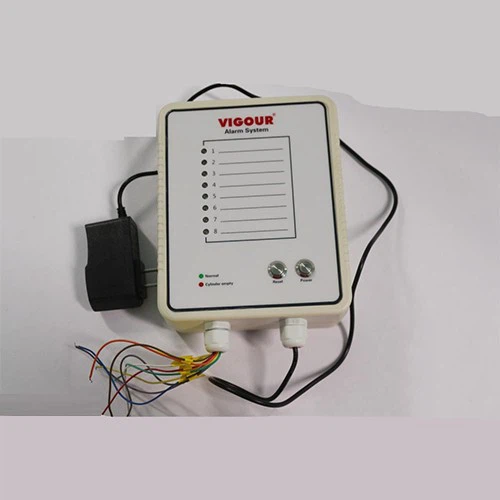
In addition to gas psi gauges, there are other products that are often used in high - temperature gas systems. One such product is the Gas Alarm System. A gas alarm system can detect the presence of dangerous gases in the environment and alert operators in case of a leak or other safety issues. In high - temperature gas environments, the alarm system needs to be able to withstand the heat and operate reliably.
Another important product is the High Purity Gas Filter. High - purity gas filters are used to remove impurities from the gas stream. In high - temperature applications, these filters need to be made of materials that can withstand the heat and maintain their filtering efficiency.
The Co2 Gas Heater is also commonly used in high - temperature gas systems. CO2 gas heaters are used to heat the CO2 gas to the required temperature for various applications, such as in food processing or greenhouse cultivation.
Contact for Procurement and Consultation
If you're in need of gas psi gauges for high - temperature gas environments or have any questions regarding our products, we're here to assist you. Our team of experts has extensive knowledge and experience in providing suitable solutions for different industrial applications. We can help you select the right gauge based on your specific requirements and ensure its proper installation and operation.
Whether you're in the power generation, chemical processing, or any other industry that involves high - temperature gas systems, we can offer you high - quality products and professional services. Don't hesitate to reach out to us for procurement and consultation.
References
- ASME Boiler and Pressure Vessel Code, Section VIII, Division 1. "Rules for Construction of Pressure Vessels."
- Perry's Chemical Engineers' Handbook, 8th Edition. McGraw - Hill.
- Instrumentation, Measurement, and Analysis, 3rd Edition. By Doebelin, Ernest O.


